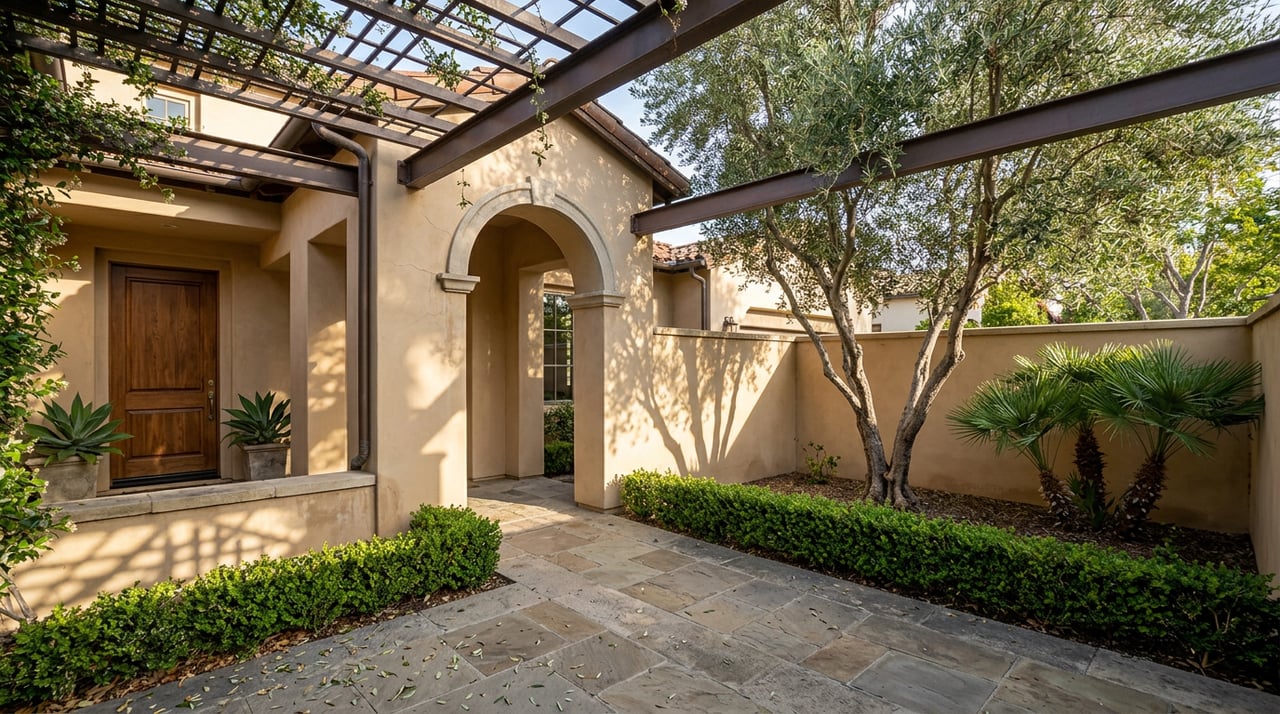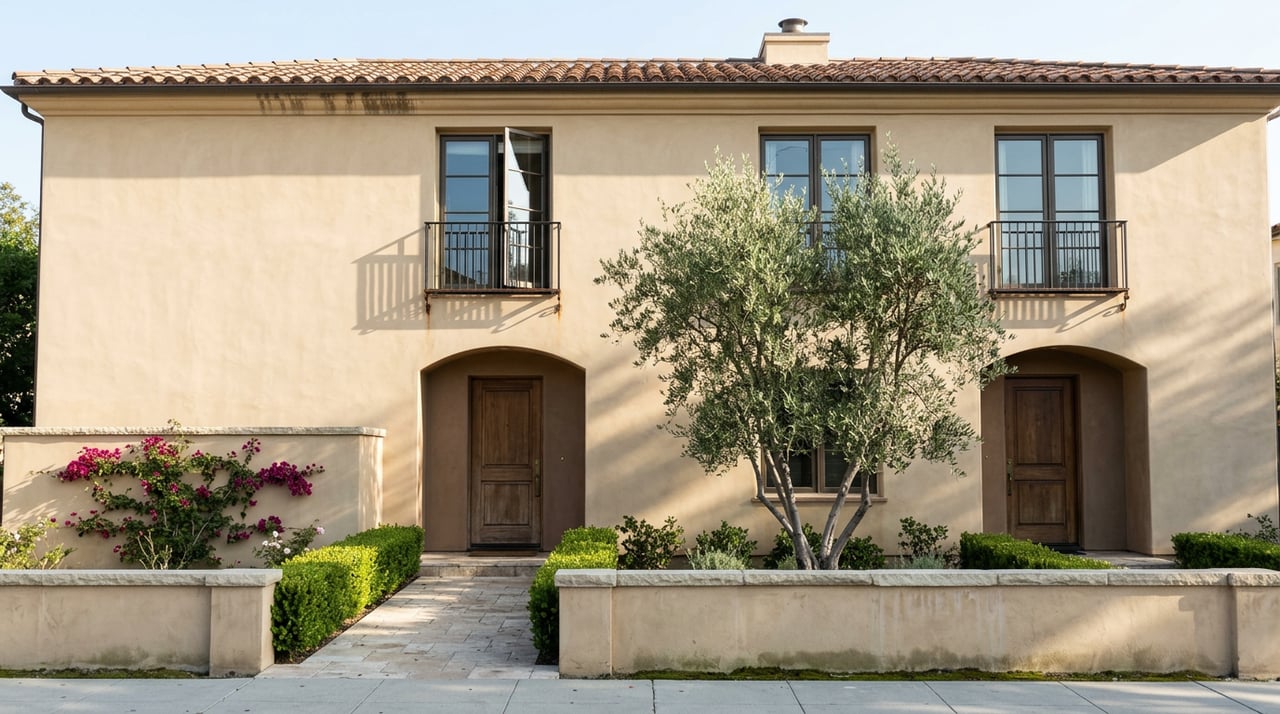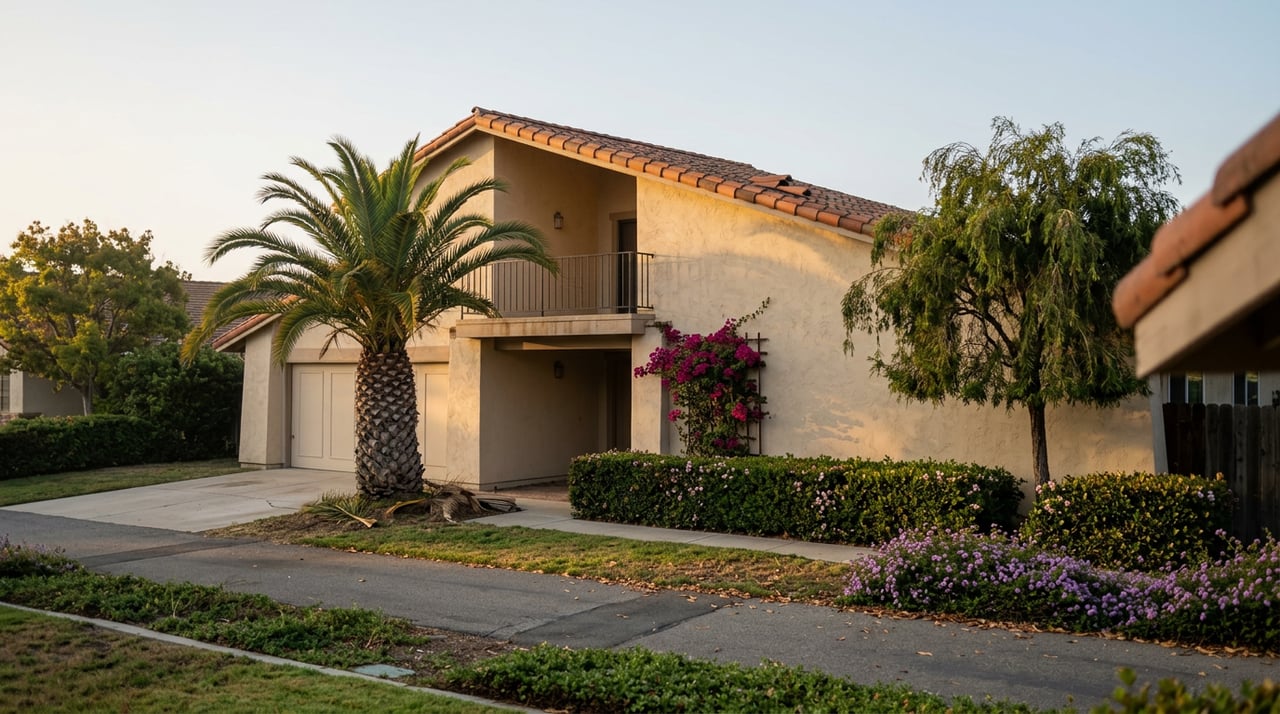
Picture two listings pulled from the same afternoon of house hunting in Southwest Riverside County. Both ask $650,000. Both have four bedrooms, a two-car garage, and a backyard big enough for a swing set. One sits in a subdivision built in the early 2000s in Temecula. The other is a newer build in Menifee or Eastvale, finished within the last five years. On paper, they are the same purchase.
They are not the same monthly payment. And the difference has nothing to do with the mortgage rate.
The gap comes from a line item that never shows up in a Zillow search filter or a listing photo: Mello-Roos, the special tax that funds the roads, schools, and sewer lines inside newer master-planned communities. It is legal, disclosed, and completely predictable once you know where to look. Most buyers do not know where to look until a title company sends over the preliminary tax bill and the number quietly doubles.
The Charge That Doesn't Show Up in the List Price
California's Proposition 13 caps the base property tax rate at 1% of assessed value. That part is consistent everywhere in the state, including Riverside County. What Prop 13 did not do was give cities and counties a way to pay for new infrastructure when a farm field turns into 800 new homes. The Mello-Roos Community Facilities Act of 1982 filled that gap by letting local agencies form a Community Facilities District, or CFD, that sells bonds to build the roads, fire stations, and parks a new subdivision needs, then charges homeowners inside the district an annual special tax until the bonds are paid off.
The Riverside County Assessor's office describes it plainly on its own special assessments page: the fee shows up on your tax bill as a CFD line, separate from the 1% base rate, and it can range from minimal to substantial depending on the size of the bond and the number of properties splitting the cost.
That last detail matters more than it sounds. Mello-Roos is a fixed dollar amount set when the district is formed, not a percentage of what you paid for the house. A $3,500 annual assessment costs the same whether the home sold for $500,000 or $900,000. It hits a smaller purchase proportionally harder than a larger one.
What It Actually Costs, City by City
Mello-Roos is not evenly distributed across Southwest Riverside County. It tracks construction timelines almost exactly: subdivisions built after 1990, and especially after 2000, are where CFDs concentrate.
| Area | Typical annual Mello-Roos | Effective tax rate with CFD |
|---|---|---|
| Eastvale (newer tracts) | $3,000–$4,500 | Up to 1.7–1.9% of assessed value |
| Temecula/Murrieta (post-2000 subdivisions) | $2,000–$3,500 | Can reach 1.9%+ on some parcels |
| Lake Elsinore (newer tracts) | $1,800–$3,200 | Roughly 1.5–1.7% |
| Older, pre-1990 neighborhoods (Old Town Temecula, Meadowview, Los Ranchitos, The Villages, parts of Rancho Highlands) | Little to none | 1.1–1.3% (base only) |
Eastvale, incorporated only in 2010, has close to citywide Mello-Roos coverage because almost the entire city was built inside CFDs. On a $775,000 home in a heavily assessed Temecula tract, the swing between a base-only tax bill and one carrying a CFD assessment can run from roughly $8,500 to $14,700 a year, which is the difference between a manageable annual cost and a serious budgeting surprise.
Newer master-planned communities like Sommers Bend in Temecula, off Butterfield Stage Road, or Spencer's Crossing in Murrieta, offer the amenities buyers want: trails, clubhouses, community events. They also sit inside active CFDs. Meanwhile, an older Temecula neighborhood like Meadowview can carry little to no Mello-Roos at all, simply because it predates the bonds.
The Real Problem: It Counts Against You Before You Even Get a Rate
Here is where the number stops being an annoyance and starts changing what a buyer can actually afford. Lenders include Mello-Roos in the debt-to-income calculation exactly the way they include a mortgage payment, property tax, or HOA dues.
A $4,000 annual Mello-Roos assessment adds roughly $333 to the monthly housing payment a lender uses to qualify you. That single line item can reduce a buyer's maximum conventional loan amount by $50,000 to $60,000. On an FHA loan, where qualifying ratios are tighter to begin with, the effect lands harder. A buyer stretching for a $750,000 purchase in a Temecula CFD community can watch the deal come apart over a $3,000 Mello-Roos assessment they never budgeted for, discovered only after the preliminary title report arrives.
This is the part that rarely gets mentioned in a listing description or an open house conversation, and it is the reason two homes priced identically can point a buyer toward two very different loan approvals.
Why "More House for the Money" Isn't the Whole Sentence
Southwest Riverside County is usually sold to move-up buyers as a straightforward tradeoff: pay less, get more house, accept a slightly longer commute. The city-by-city numbers support that story on the surface. Redfin put Menifee's average house price at $585,000 in July 2026, down slightly from a year earlier, with homes typically selling in about 36 days in a competitive market. Murrieta ran higher, with Redfin showing an average house price of $670,000 that same month. Temecula sat well above both: Zillow put the typical home value at $767,152 in May 2026, while Redfin reported a median sale price of $745,554 over the three months ending that same month. Winchester, the newest and most builder-active submarket of the four, posted the lowest price per square foot at roughly $297 in a June 2026 report covering all four cities.
That framing holds up until you factor in which specific tract the house sits in. A Menifee home in one of the city's newer developments, where builders like Lennar and Richmond American are still active, is more likely to carry a CFD than an older section of the same city. The same is true in Winchester, where heavy builder activity means concessions are common (median concession amounts in Winchester and Menifee exceeded $23,000 as of April 2026, compared to about $20,245 in only a quarter of Temecula sales that same period) but so is Mello-Roos, because almost none of that inventory predates 2000.
So the honest comparison is not Menifee versus Temecula. It is new-construction-with-CFD versus older-resale-without-one, and that split can run through the same city, sometimes the same street. A buyer chasing the lowest sticker price in Menifee or Winchester may end up with a total monthly cost closer to an older, pricier-looking Temecula home in Meadowview or Los Ranchitos than the listing prices alone would suggest.
Reading This Market Right Now
Countywide, the numbers are shifting in a direction that gives buyers more room to ask these questions before writing an offer. The Riverside County median home price rose to $649,000 in July 2026, up more than 2% from June and about 3% year over year, according to California Association of Realtors data reported by NBC Palm Springs. At the same time, sales fell nearly 14% from June, mortgage rates averaged around 6.5% that month, and more inventory is coming onto the market as the year moves into its typically slower fall season.
That combination, higher prices but fewer sales and rising inventory, tends to hand negotiating leverage back to buyers, particularly on new construction where builders are already offering rate buydowns and closing-cost credits to keep sales moving. It is a reasonable moment to ask a builder to help offset a CFD assessment, or to ask a resale seller in an older, low-Mello-Roos neighborhood to hold firm on price precisely because the total cost of ownership already favors the buyer.
Before writing an offer on anything built after 1990 in Southwest Riverside County, ask for the preliminary title report and look for the CFD line item, or request the Rate and Method of Apportionment document, which spells out how much remains and for how long. A Mello-Roos bond typically runs 20 to 40 years from formation, and the special tax disappears once it is paid off, so a district formed in the early 2000s may have meaningfully less time left than a five-year-old one carrying the same annual charge.
A Few Direct Questions
Does Mello-Roos ever expire? Yes. The special tax lasts only as long as it takes to retire the bonds that funded the district's infrastructure, generally 20 to 40 years from formation. Some service-funding CFDs, the kind that pay for ongoing maintenance rather than one-time construction, can continue longer.
Is it tax deductible? Sometimes, and only partially. A portion may be deductible if it funds ongoing maintenance rather than new construction, but the burden is on the taxpayer to document that share, and many California homeowners already reach their SALT deduction cap through base property tax and state income tax before a Mello-Roos deduction becomes meaningful. This is a conversation for a tax professional, not a blog post.
How do I find out if a specific house has it before I write an offer? The most reliable route is the property's Assessor's Parcel Number, which your agent or the title company can use to pull the exact CFD assessment directly from the county's tax roll rather than relying on an estimate.
Comparing Southwest Riverside County cities on median price alone tells you which zip code is cheaper on paper. It does not tell you what you will actually pay each month, or how much home a lender will let you buy once that tax line is factored in. That gap is exactly where a local agent earns their keep, pulling the preliminary title report before you fall for a listing, not after.
If you are weighing Temecula against Menifee, or a resale home against new construction anywhere in the Inland Empire, Key Connections Real Estate can walk through the real total cost with you before you write an offer. Book an appointment and bring your budget, we will bring the tax bill.